Brows6 min read
How Often Should You Get Your Eyebrows Threaded?
Most people thread every two to four weeks, but growth cycles, brow goals and whether you’re growing them out all change the answer.

The short answer is every two to four weeks. The useful answer depends on what your brows are doing, what you want them to look like, and whether you are maintaining a shape or working towards one.
Why two to four weeks
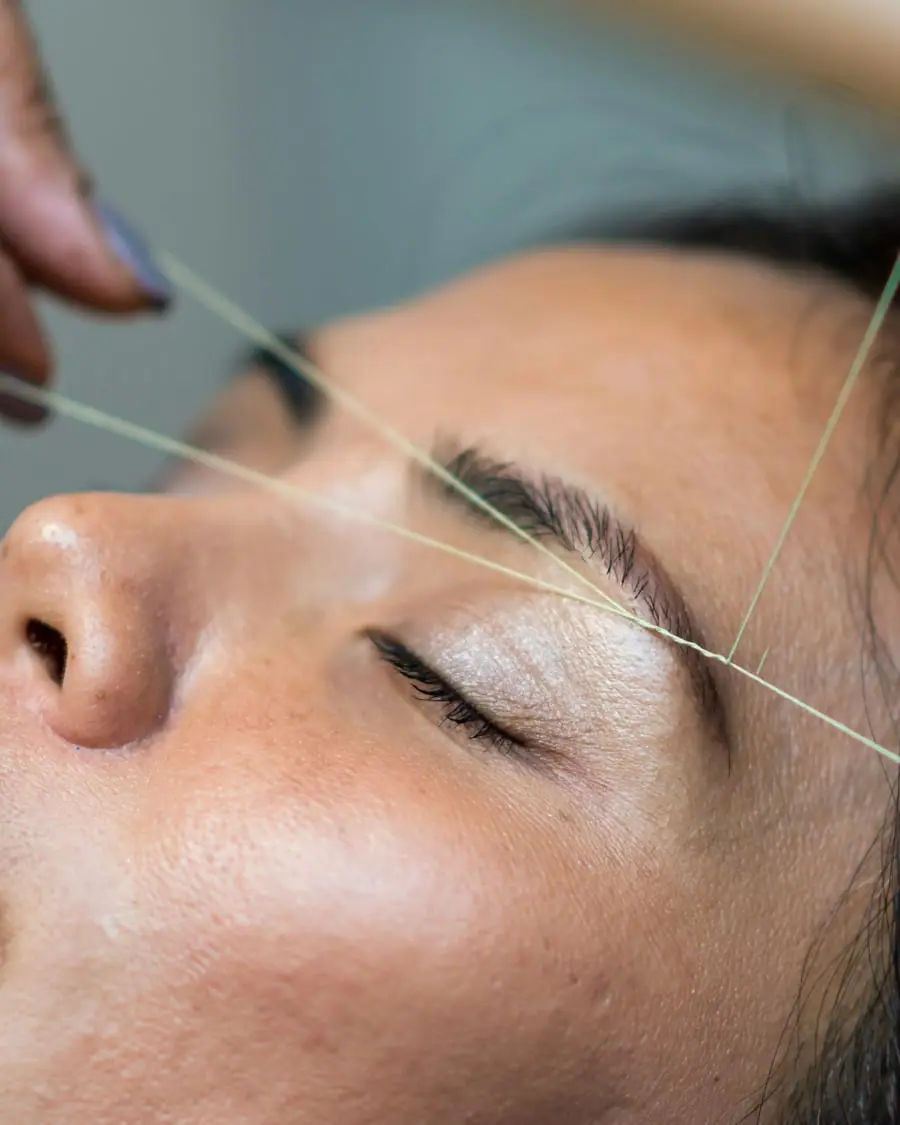
Threading removes hair at the root, so what you are waiting for is not the same hair returning. It is a new hair growing from scratch.
Eyebrow hairs run on a shorter cycle than the hair on your head, which is why brows never grow past a certain length. A new hair generally becomes visible somewhere between two and four weeks after removal, and that window is where most people land.
Within it, the variation is genuinely individual. Some people look untidy at a fortnight; others go five or six weeks and still look tidy. Neither is a problem, and it is not something you can change; it is simply how your hair grows.
What actually decides your interval
How dark and coarse your hair is. Dark, thick hair announces itself the moment it appears. Fair or fine hair can grow for weeks before anyone notices. This is the single biggest factor, and it is why two people with identical growth rates need appointments at very different intervals.
How defined a shape you keep. A strong, clean arch depends on the line staying sharp, so it needs more frequent attention. A softer, fuller brow tolerates regrowth far better because there is no crisp edge for stray hairs to spoil.
How much you notice. Some people are bothered by three stray hairs; others genuinely do not see them. Both are fine. There is no hygiene or health argument for a particular interval, because brow threading is entirely cosmetic, so the right frequency is whatever keeps you comfortable.
Whether you tweeze in between. More on this below, because it changes things more than people expect.
Why the first few appointments feel inconsistent
If you have recently switched to threading, or you are new to brow appointments generally, the first two or three can feel like the results do not last.
The reason is that your brow hairs are not synchronised. At any moment, some are actively growing, some are resting and some are about to shed. A threading appointment removes everything currently visible, but hairs that were dormant that day will surface over the following couple of weeks regardless.
After a few appointments at a regular interval, the cycle tends to even out and results become more predictable. If you gave up on threading after one appointment because it “did not last”, this is usually why.
The tweezing problem
Almost everyone tweezes between appointments. It is understandable. A stray hair appears and it takes five seconds to deal with.
The difficulty is not the tool, it is the vantage point. Working close to a mirror on one hair at a time, you lose sight of the brow as a whole. Each individual hair seems obviously wrong; the cumulative effect over a few months is a shape that has quietly drifted somewhere you did not intend.
Almost every over-plucked brow got there gradually, in good faith. If you do tweeze between appointments:
- Take only hairs clearly outside the established shape.
- Never touch the top edge of the brow, as that is where thinning does the most damage.
- Step back from the mirror every few hairs and look at both brows together.
- Stop when you are unsure rather than continuing to “even it up”. Evening it up is how brows get thinner.
Honestly, leaving it entirely and letting your therapist handle it produces better brows. It just requires more patience than most of us have.
If you are growing your brows out
This changes the advice completely.
When you are recovering a brow after over-plucking, the instinct is to stop having appointments altogether. That usually backfires, because the growing-out phase looks untidy for months and most people give up somewhere around week six.
The better approach is to keep coming, but to have very little removed. Ask your therapist to take only the obvious strays, the hairs well below the brow line or between the brows, and to leave everything that might eventually contribute to the shape. Your brow still reads as deliberate, which makes the long wait far easier to live with.
At that stage, appointments every four to six weeks are usually plenty. There is not much to remove, and coming in too often creates temptation on both sides.
Be realistic about the timescale. Recovering a heavily over-plucked brow takes months rather than weeks, and some follicles that have been repeatedly cleared over many years may not return at all. If that turns out to be the case, semi-permanent makeup is one option worth discussing, though not before you have given the natural regrowth a proper chance.
Booking around an event
If you have a wedding, a holiday or anything photographed coming up, do not book your brows for the day before.
Threading leaves the area slightly pink for an hour or two, and occasionally a little longer on sensitive skin. Five to seven days ahead is the sweet spot: any redness has long gone, the shape has settled, and there is not enough regrowth to notice.
That timing also leaves room to adjust if you are not completely happy, which is much easier to arrange a week out than the night before. Our guide to planning treatments before a special occasion sets out the full countdown, including where brows sit relative to facials and waxing.
Should you book a standing appointment?
If you find a rhythm that works, booking your next appointment before you leave saves the low-level irritation of realising your brows need doing and finding nothing available that week.
It is not obligatory, and we would not press you into it. But brows are one of the few treatments where a regular slot genuinely earns its place, because the whole point is consistency.
A note on what threading cannot do
Threading removes the hairs that are there. It does not change how your brows grow, thicken sparse areas, or alter the underlying shape your bone structure allows.
If your brows are naturally light, threading will not make them look darker. That is a job for brow products or, if you want something longer-lasting, semi-permanent makeup. And if you have noticed sudden or unusual brow hair loss, that is worth mentioning to your GP rather than treating as a shaping problem.
Working out your interval
The practical method: have your brows threaded, then note the day you first look in the mirror and think they need doing again. That gap, minus a few days, is your interval.
It is more reliable than any general rule, and once you know it you can stop thinking about it.
We thread at our salon on Herne Bay High Street and are happy to suggest a rhythm once we have seen how your brows regrow. You can read more on our eyebrow threading page, or if you are weighing up methods, our comparison of threading and waxing covers the differences. Call us on 07337 350130 to book.
Book with us
Have a question about this treatment?
We’re on Herne Bay High Street and happy to talk something through, whether or not you’re ready to book.