Massage8 min read
Traditional Thai Massage: What to Expect From Your Appointment
Fully clothed, on a mat, with assisted stretching throughout. Here’s how Thai massage differs from an oil massage and how to prepare for it.

Traditional Thai massage is quite different from the oil massage most people in the UK picture. You stay fully clothed, you lie on a mat on the floor rather than a couch, and rather than being rubbed you are pressed, rocked and moved through a sequence of assisted stretches.
People often describe it as feeling like yoga performed on you. It is more active and more involving than a Swedish massage, and for anyone who sits at a desk all week the stretching through the hips, shoulders and back is usually the part that makes the strongest impression.
No oils are used, so there is no need to undress and nothing to shower off afterwards. Pressure is applied with palms, thumbs, forearms, elbows and sometimes feet, working along lines through the body rather than kneading individual muscles.
The assisted stretching is the defining element. Your therapist moves your limbs and torso through positions you would find hard to reach yourself, using their own body weight for leverage. It is done slowly and with your breathing, not forced.
Because you are on a mat at floor level, the therapist can work with far more angles and leverage than a treatment couch allows, which is why the sequence covers the whole body from feet to head.
Loose, comfortable clothing you can move in, the kind of thing you would wear to a yoga class. Soft trousers or leggings and a t-shirt are ideal. Avoid jeans, belts, anything with stiff seams, and anything you would mind creasing.
You will be asked to remove watches and jewellery, and socks come off at the start.
Thai massage can be firm, but firm is not the same as painful, and there is nothing to be gained from enduring more pressure than is comfortable. Say so at any point and your therapist will adjust. This is expected, not awkward.
Tell us before we begin about any injury, joint problem, recent surgery, or area you would prefer left alone. If you are pregnant, have a heart condition, osteoporosis, disc problems, high blood pressure, or are recovering from an injury, please check with your GP before booking. Thai massage is a relaxation treatment; it is not physiotherapy and we make no claims about treating any condition.
All Thai massage is priced per hour.
| Treatment | Price |
|---|---|
| Thai oil massage | £50per hour |
| Thai hot stone therapy | £40per hour |
| Thai deep tissue massage | £50per hour |
| Treatment | Price |
|---|---|
| Thai head, neck and shoulders | £35per hour |
| Thai lower back, legs and feet | £40per hour |
Please book Thai massage at least one day in advance.
Why clients choose it
01
No oils and no undressing, which many people find considerably more comfortable than a couch-based massage.
02
Assisted stretches reach through the hips, shoulders and spine using the therapist’s leverage rather than your own effort.
03
Works from the feet upwards rather than concentrating on one area, so nothing gets overlooked.
04
Firmness is adjusted throughout, and saying it is too much is entirely expected.
Your appointment
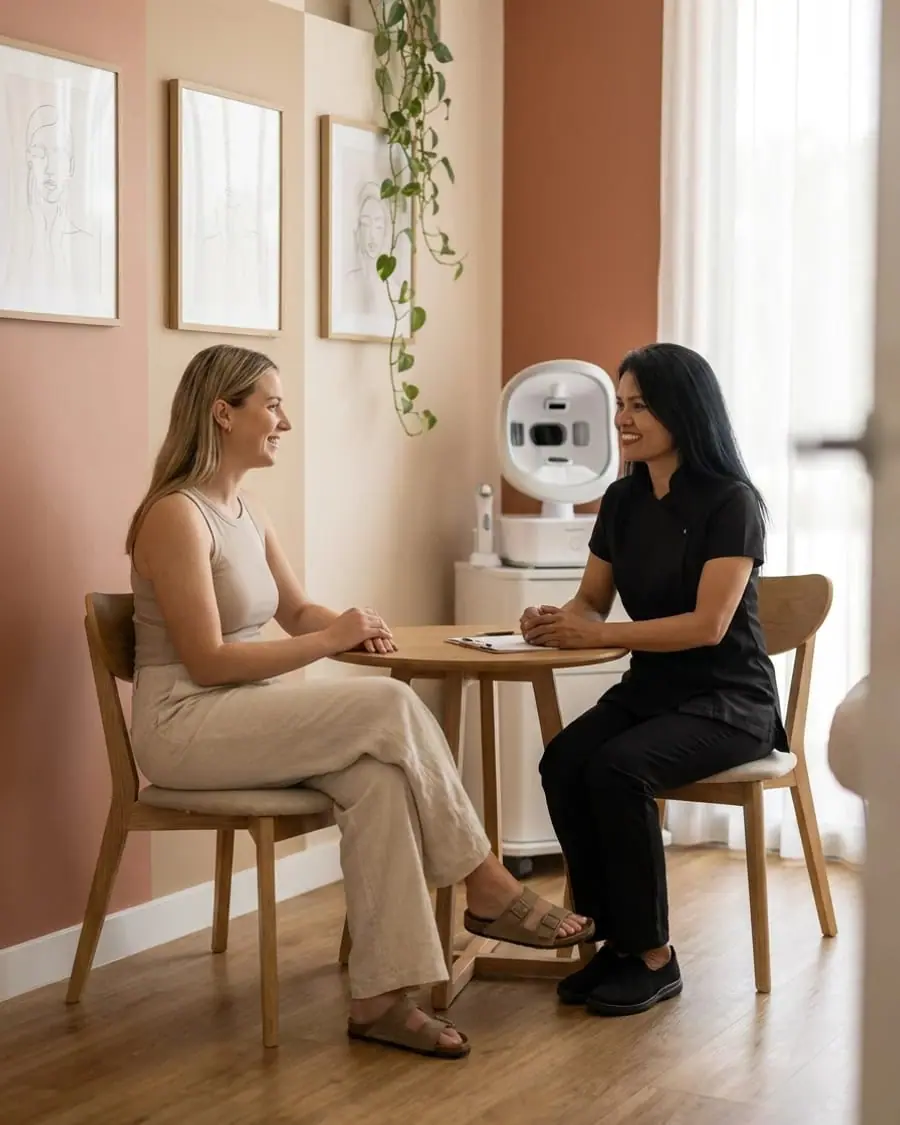
A short conversation about any injuries, health conditions, or areas to avoid.
You keep your clothes on and lie on a padded mat at floor level. Socks and jewellery come off.
The sequence usually begins at the feet and legs and works upwards through the back, arms, shoulders and neck.
Pressure is combined with slow assisted stretches, timed with your breathing.
Time to sit up slowly at the end. Most people feel loose and slightly spaced out for a while afterwards.
Questions
No. You stay fully clothed throughout. Just wear something loose and comfortable that you can move in. No oils are used.
A Swedish or aromatherapy massage uses oil and kneads muscles while you lie still on a couch. Thai massage is done on a mat, fully clothed, and combines pressure with assisted stretching, so you are moved through positions rather than lying passively.
It should not be. It can be firm, and some stretches are intense in the moment, but pressure is adjusted to you. Tell your therapist if anything is too much. It is expected and it is not a nuisance.
Most people feel loosened up and pleasantly tired. Some mild soreness the next day is common, much like after a good stretch or a workout, and it settles within a day or two.
Please check with your GP first if you are pregnant, have osteoporosis, disc or spinal problems, a heart condition, high blood pressure, are recovering from surgery or injury, or have any condition affecting your joints. Always tell us about these when you book.
Further reading
You might also like